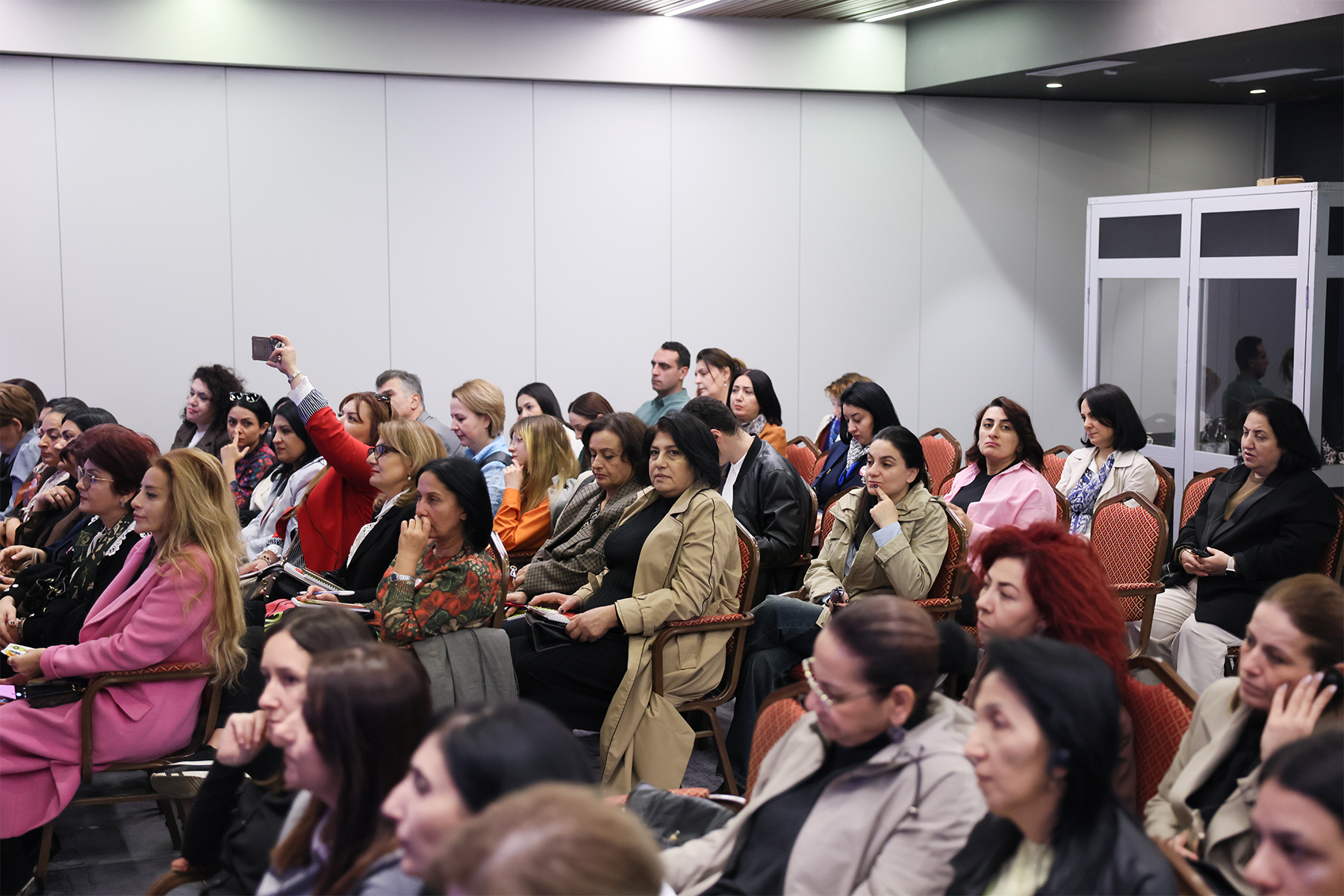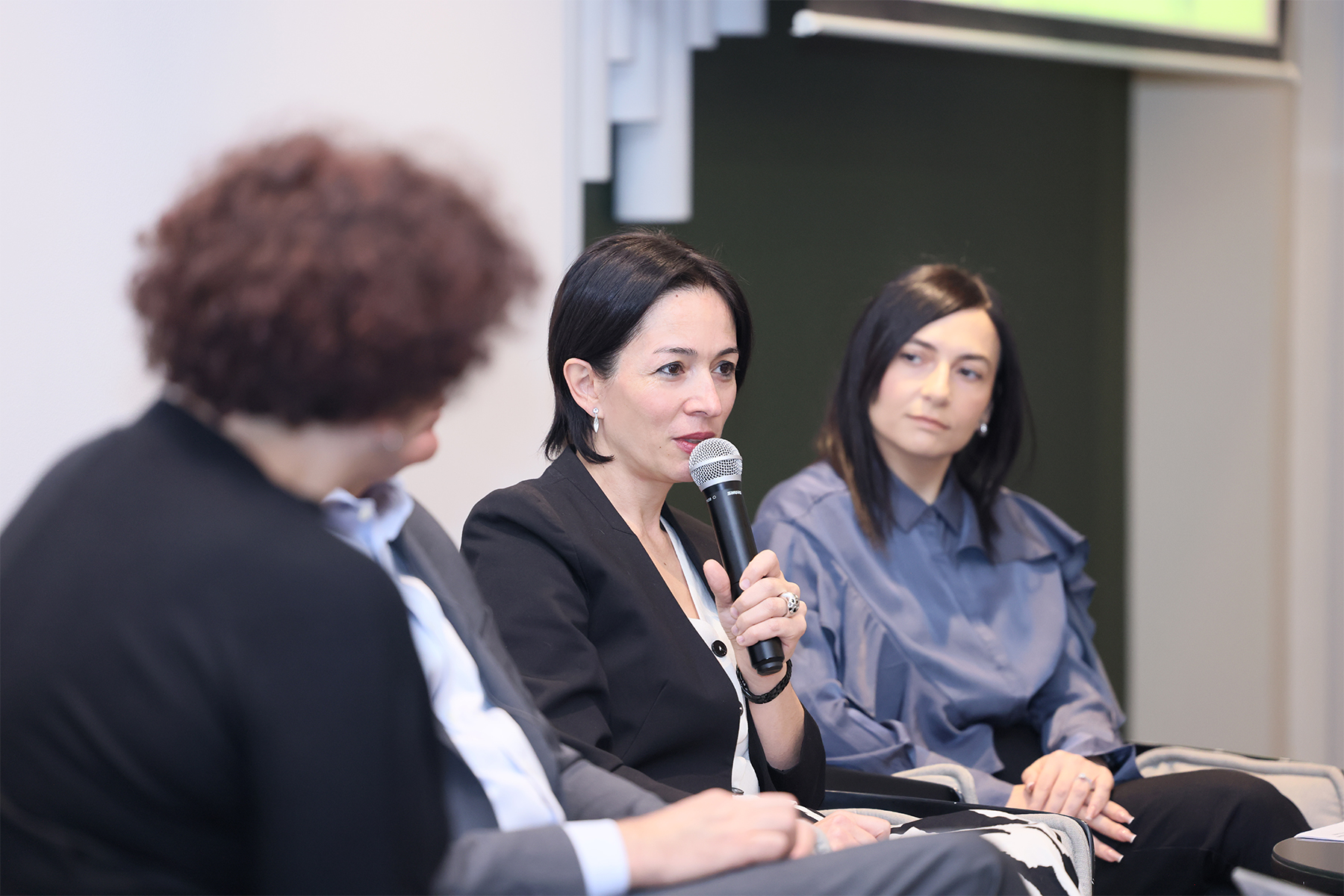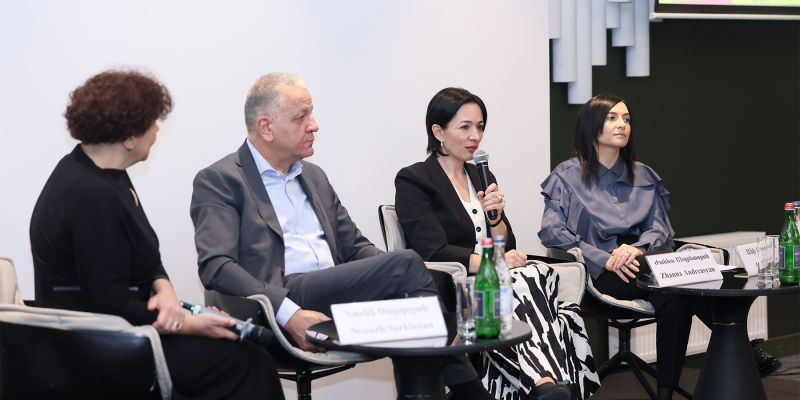
November 8-15 is Media Literacy Week in Armenia. The official opening of the Media Literacy Week was announced with a thematic conference, which was attended by ESCS Minister Zhanna Andreasyan, Head of the European Union Delegation to Armenia Vassilis Maragos, Director of the “Media Initiatives Centre” Nouneh Sarkissian, and Team Leader at Konrad Adenauer Foundation's “Youth in Action” Program Ani Torosyan.
Welcoming the attendees, the ESCS Minister emphasized that the “Media Literacy Week” event is an overview of daily work to discuss fresh ideas and approaches. Reflecting on the changes undertaken, Zhanna Andreasyan said: “For instance, five years ago, schools' capacities for media use and accountability were incomparable to what they are today. This, naturally, does not mean that what we have is sufficient: this means that we pave way together. We want the education system to generate responsible and competitive citizens: the logic of the state standard for general education is built on this very idea. The concept of digital citizenship is becoming an essential aspect of responsible citizenship, since our lives are increasingly shaped not only by the physical world but also by digital and online environments. Therefore, our behaviour in the digital domain should not differ from the rules of public coexistence.”
She reminded that the ESCS Ministry has declared the current academic year the Year of Safe and Secure Education, highlighting cybersecurity, adherence to digital hygiene rules, and the protection of personal data as its key components. “We are in constant need for methodology and capacity building: I am glad that teacher training, various guides, and manuals are an integral part of the professional development process. We are currently working with partners to develop and apply artificial intelligence and digital literacy tools in education. It should also be noted that the digital domain is not only risky and hazardous, but it also gives people vast opportunities which they must manage to use correctly. School is the place where any important conversation may take place, because if a topic that interests a student is not discussed at school, it will be discussed elsewhere — with all the possible consequences that may follow. The conversation about media tools must also be methodologically and pedagogically guided correctly in school so that students can benefit most from the opportunities they provide,” Zhanna Andreasyan noted, thanking her colleagues for their ongoing cooperation.
Head of the European Union Delegation to Armenia, Vassilis Maragos, also highlighted the significance of the event and noted that media literacy is of strategic importance for the European Union in strengthening democratic resilience, transparency and civic participation: “Thanks to the “Youth in Action: Youth Empowerment and Leadership Development in Armenia” program, young leaders, educators, and organizations have gained practical skills in fact-checking, content creation, digital citizenship, and community engagement, thereby contributing to strengthening Armenia’s information resilience.”
As part of the conference, panel discussions and concurrent workshops for teachers, educators, fact-checkers, and the youth were held. The Media Literacy Week is being held in Armenia for the eighth time with the support of the “Youth in Action: Youth Empowerment and Leadership Development in Armenia” program, co-funded by the European Union and the Konrad Adenauer Foundation. This year’s theme is “Media Literacy and Responsible Digital Citizenship”. Information about the Media Literacy Week events is available on the mediainitiatives.am website.